
New data from the National Youth in Transition Database (NYTD) Outcomes file show that the rate of enrollment in post-secondary education among youth with foster care experience has remained relatively stable since 2015. Despite reporting their aspirations to attend and complete post-secondary education, young people with foster care experience also report low rates of post-secondary enrollment and completion. This may be due to barriers such as economic hardships, housing instability, and food insecurity.

Rates of post-secondary enrollment have remained low but stable since 2015 among 21-year-olds with foster care experience
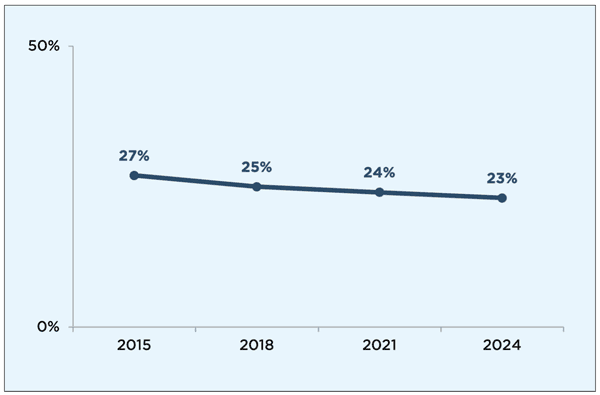
Source: Child Trends analysis of data from the National Youth in Transition Database Outcomes File Cohorts 1-4. The figure includes young people who were age 21 in each fiscal year.
Enrolling in and completing post-secondary education increases a person’s earning potential. Unfortunately, youth with foster care experience report lower rates of post-secondary completion than their peers in the general population. Researchers have explored opportunities to better support youth with foster care experience in attending post-secondary education—for example, by increasing access to financial assistance through education and training vouchers and providing on-campus supports. However, based on data from NYTD, post-secondary enrollment rates remain low, indicating that additional support may be needed to ensure that young people with foster care experience can access and benefit from post-secondary education.
Interested in working with Child Trends on tracking trends on post-secondary education among youth with foster care experience and other child welfare indicators? Contact Rachel Rosenberg, PhD, at rrosenberg@childtrends.org.