
A new Child Trends analysis of the National Youth in Transition Database (NYTD) shows that two thirds of foster youth remain stably housed through age 21. Every three years, a new cohort of NYTD respondents is surveyed at age 17, with follow-up at ages 19 and 21. Among the four cohorts of foster youth who have completed their age 21 survey, 65 to 67 percent reported being stably housed (i.e., not experiencing homelessness) at all three timepoints.

Two thirds of foster youth remained stably housed through age 21, fiscal year 2024
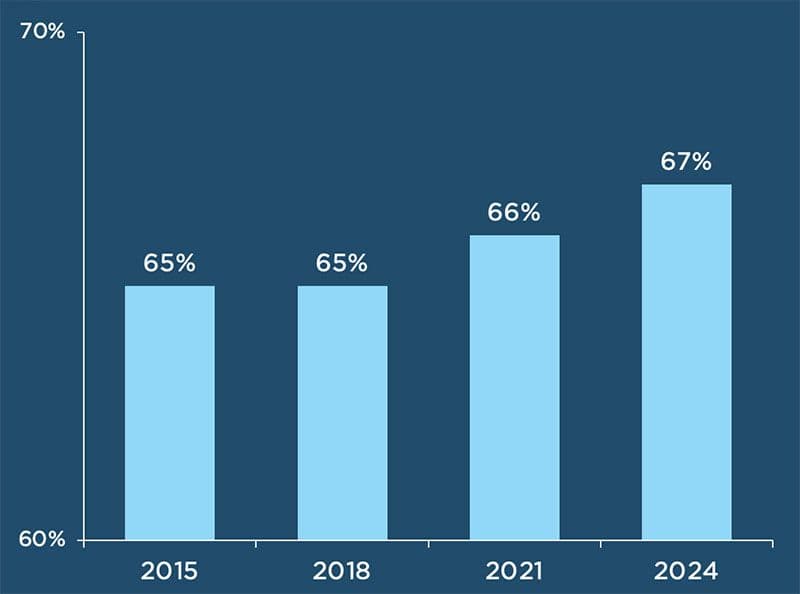
Source: National Youth in Transition Database (NYTD) Outcomes File, Cohorts 1 to 4. The figure includes all foster youth age 21 who did not report experiencing homelessness at any timepoint.
Although we do not know whether surveyed youth left foster care before age 18, aged out of foster care at age 18, or entered extended foster care after age 18, research shows that young people who are transitioning out of foster care are best positioned to achieve their goals as young adults when they have a foundation of stable housing, among other supports. Young adults ages 20 to 25 are highly mobile, regardless of foster care tenure, and housing instability can increase their likelihood of later experiencing homelessness. Young adults in general are also more likely than their younger peers to couch-surf, an often hidden form of homelessness.
Federal housing vouchers, Chafee Room and Board funds, and extended foster care services support resilience among older foster youth by connecting them to housing options. Still, one in three foster youth across the four NYTD cohorts experienced homelessness by age 21. Child welfare systems must enhance their array of supportive housing services to provide housing stability to a larger share of older youth transitioning out of foster care.
Looking to partner with Child Trends on tracking foster youth housing outcomes and other child welfare indicators? Contact Alaina Flannigan, PhD at aflannigan@childtrends.org.